

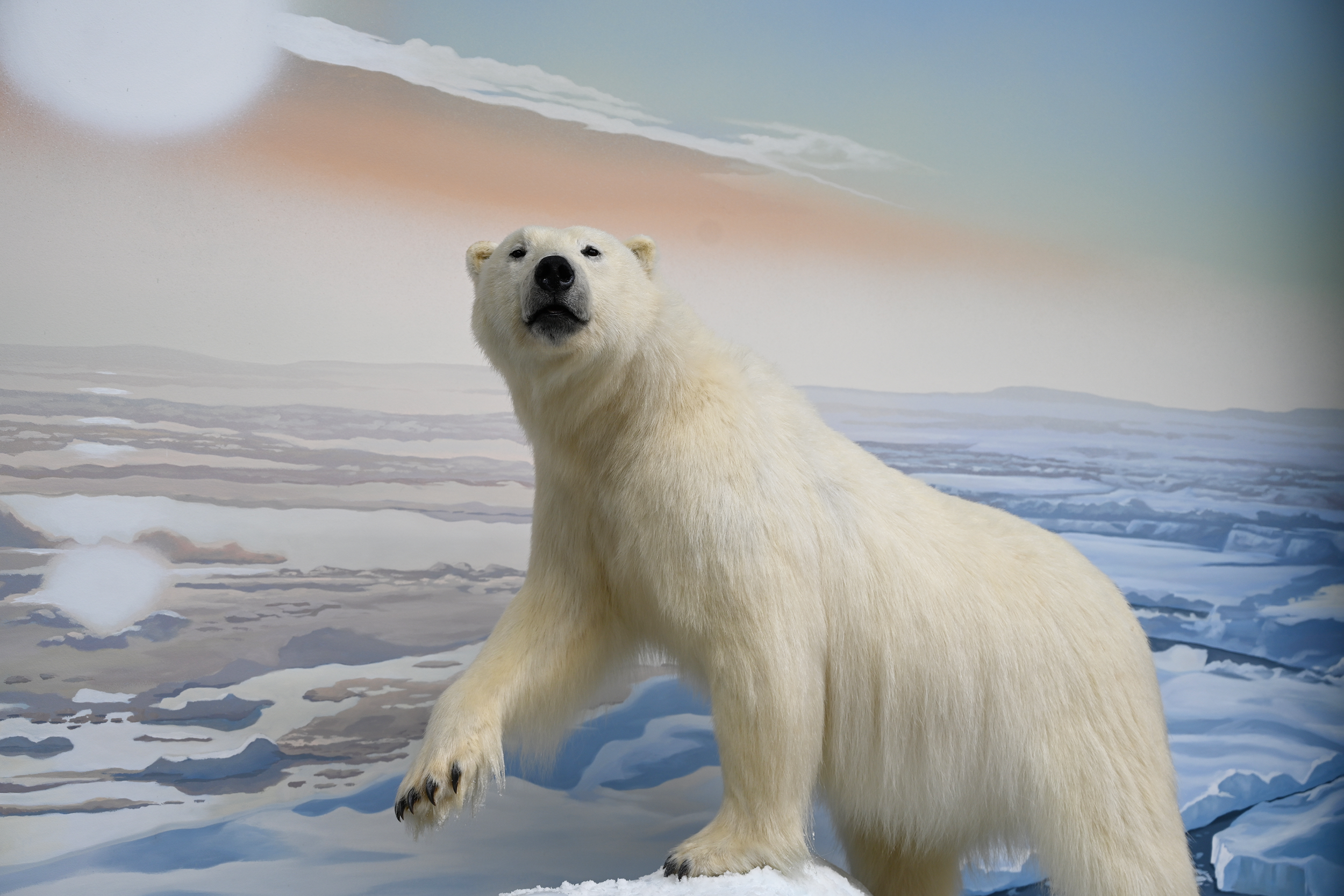
Nature’s Window: Museum of Wildlife, Natural History and Art
The dioramas depict the mission of the museum in artistically created natural habitats with lifelike displays of taxidermy animals from around the world. They strive to educate the viewer about wildlife and their natural environment with the merger of science, technology, and art. Dioramas are “windows into nature” and they have succeeded over time as tools of conservation, art, and science. The goal of the Nature’s Window Museum of Wildlife, Natural History, and Art is to emulate some of the great wildlife museums of the world, albeit on a much smaller scale, but still able to educate the viewers about conservation, wildlife management, art and the role of hunting in preserving wild places and animals for future generations. The museum’s dioramas provide a vivid experience for visitors. These “windows of nature” allow face to face interaction with a world where all life thrives in harmony, a world of beauty, wonder, and majesty. As we become more distant from nature, the art of dioramas remind us that we are still a part of the environment we share with nature and its creatures. Artists provide us “art” in service of science.
-
Humans have been hunters from the beginning of time. Many pictographs and petroglyphs like those depicted in our Art Gallery, along with other artifacts document the use of animals for survival. Many pictographs here in the Chelan and Columbia River region leave a visual example of the relationship between the early people in the area and wildlife. Today the preservation of the natural world, habitat, and wildlife is more critical than ever. Theodore Roosevelt proclaimed that “in a civilized and cultivated environment, wild animals only continue to exist at all when preserved by sportsmen”. Part of the mission of the museum is to provide a place to learn and study the relationship between man, wildlife, and the environment. It is not enough to understand the natural world, to be effective stewards of our environment, it is necessary to defend and preserve it.
The outdoors is a sensory journey with unique sounds and sights that stimulate emotional responses. Whether it is the howl of a wolf, bitter cold wind, or honk of a goose, nature is recreated in the dioramas using the latest sound, visual, and data technology. The museum allows observers to be immersed in nature, bringing back memories of their own adventures and experiences in the natural world. Natural sounds put one in that special place that is authentic in the wild. Nature quiets the mind by engaging with an intelligence larger than our own.
The initial collection of animals and artifacts have been donated to the museum by several different donors in Chelan , Washington, and Arizona. As the collection matures, additional donations of desired species will be accepted into the museum. There are very few places where owners of taxidermy work can donate their collections as most regional museums are out of space and not accepting new arrivals. The Museum will fill a need for placing these valuable art works for future generations to enjoy and learn about our natural environment.

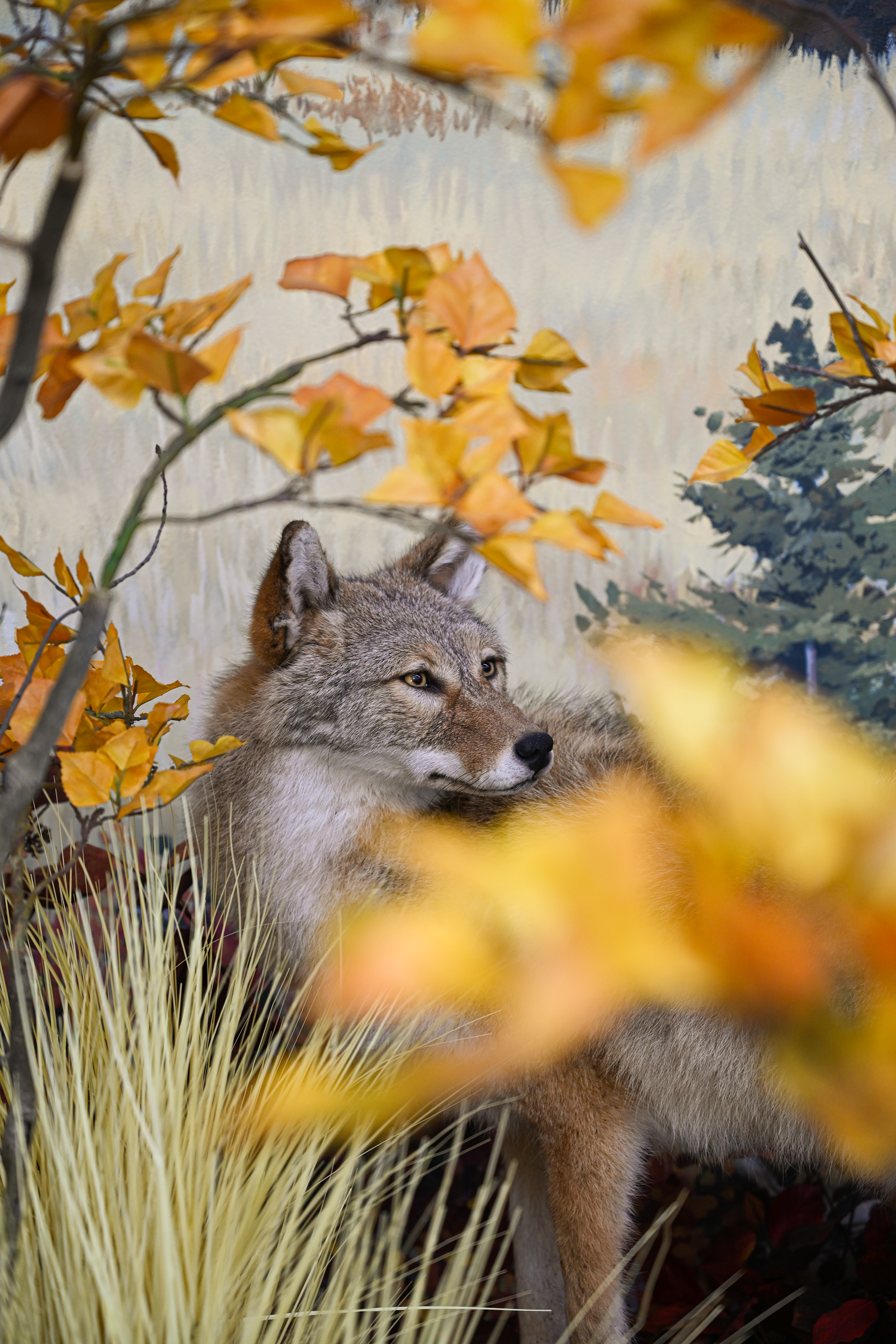
Coyote (Canis latrans) are a species of canine native to North America found in great abundance throughout its range. They prey on small mammals and pets, insects, and plants. They are referred as “song dogs” as they are the most vocal of North American mammals.
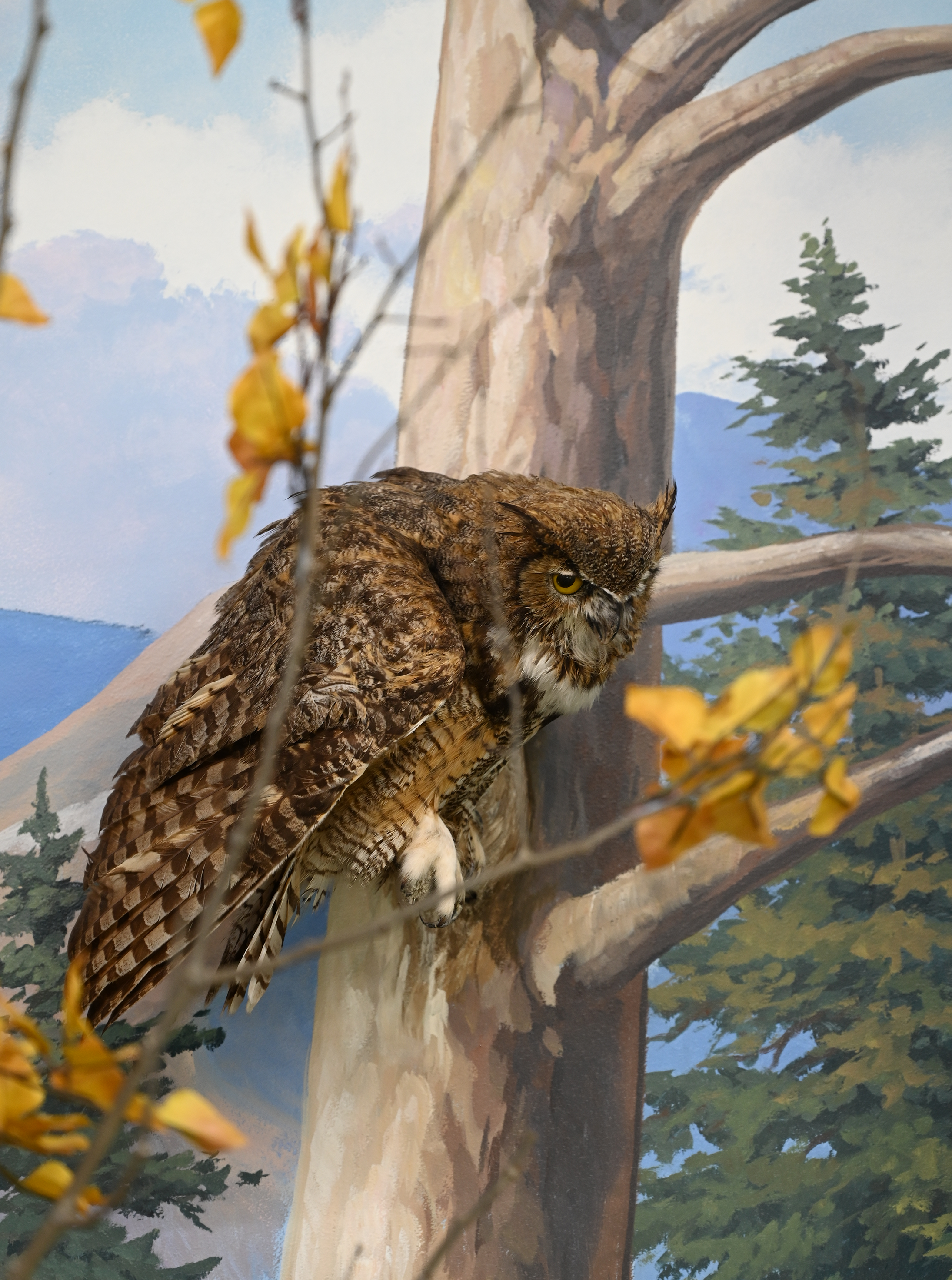
Great Horned Owl (Bubo virginianus) are one of the largest and widespread owl species in North America. Common, but seldom seen as they are a nocturnal raptor known by their familiar hoot. They are carnivores that prey on small mammals like rats, squirrels, mice, voles, and rabbits.
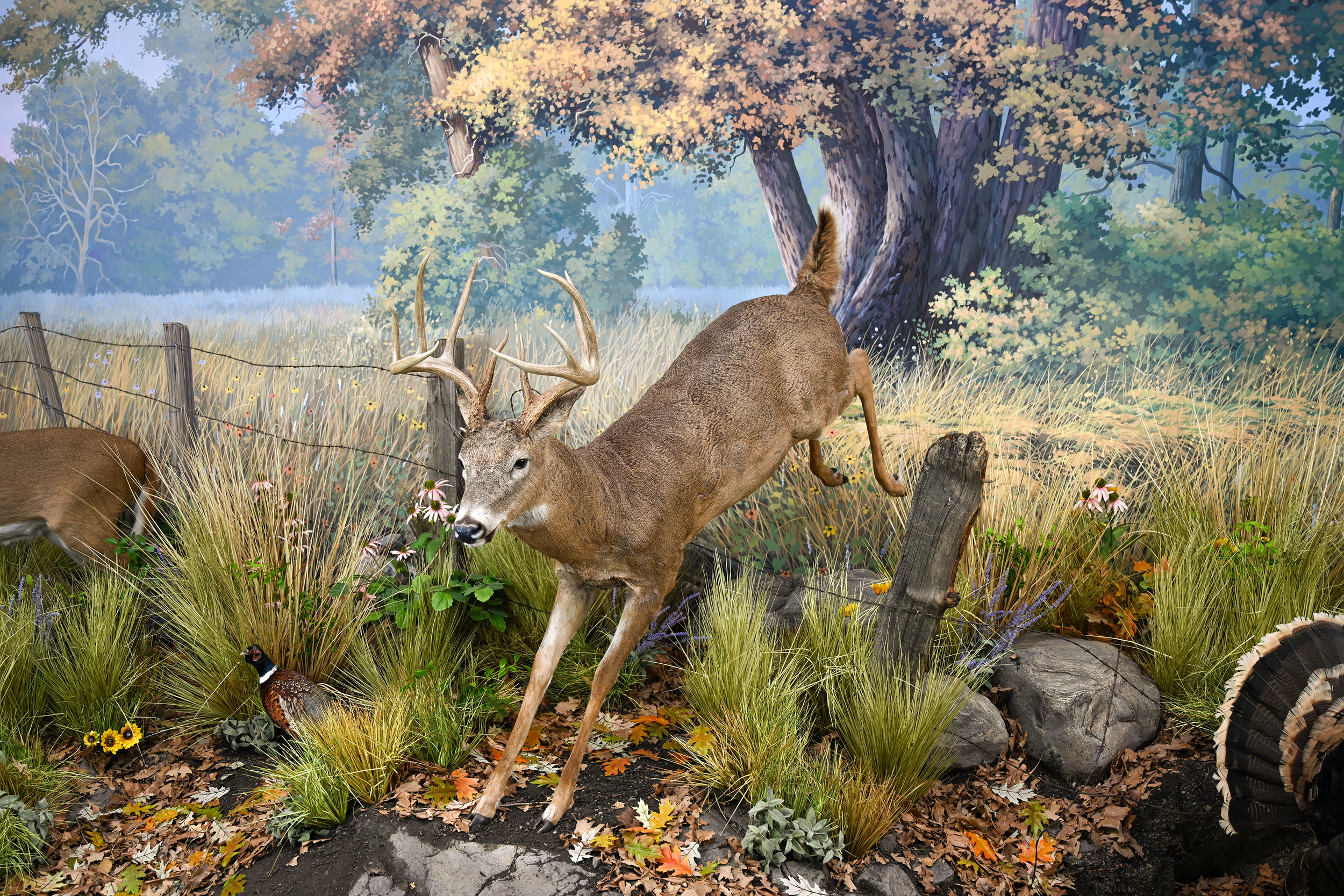
Whitetailed deer (Odocoileus virginianus) are the most numerous and widespread big game animal in North America with an estimated population of 32 million. They can thrive near urban areas and favor deciduous woods, agricultural lands, and forest edges.
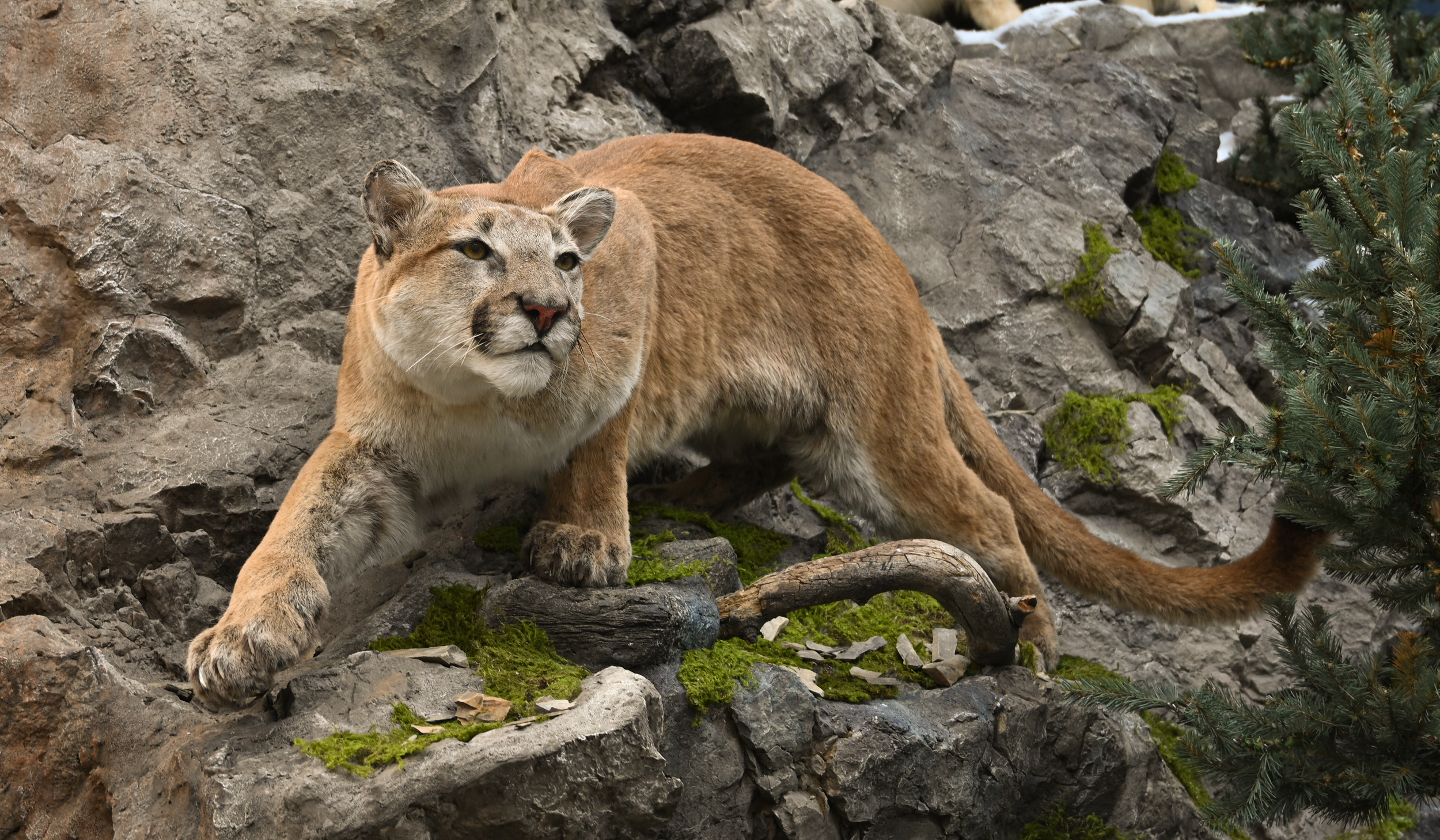
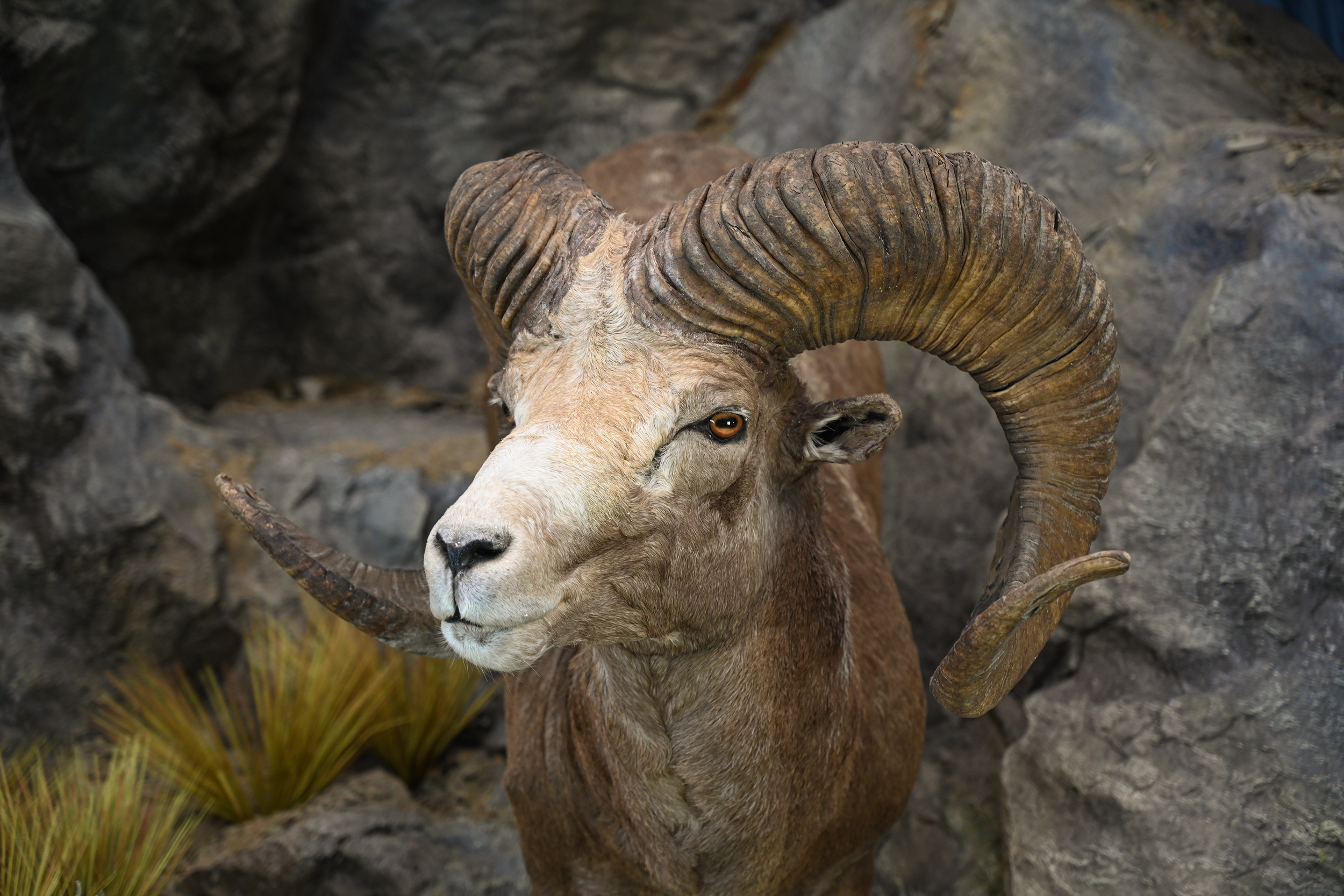
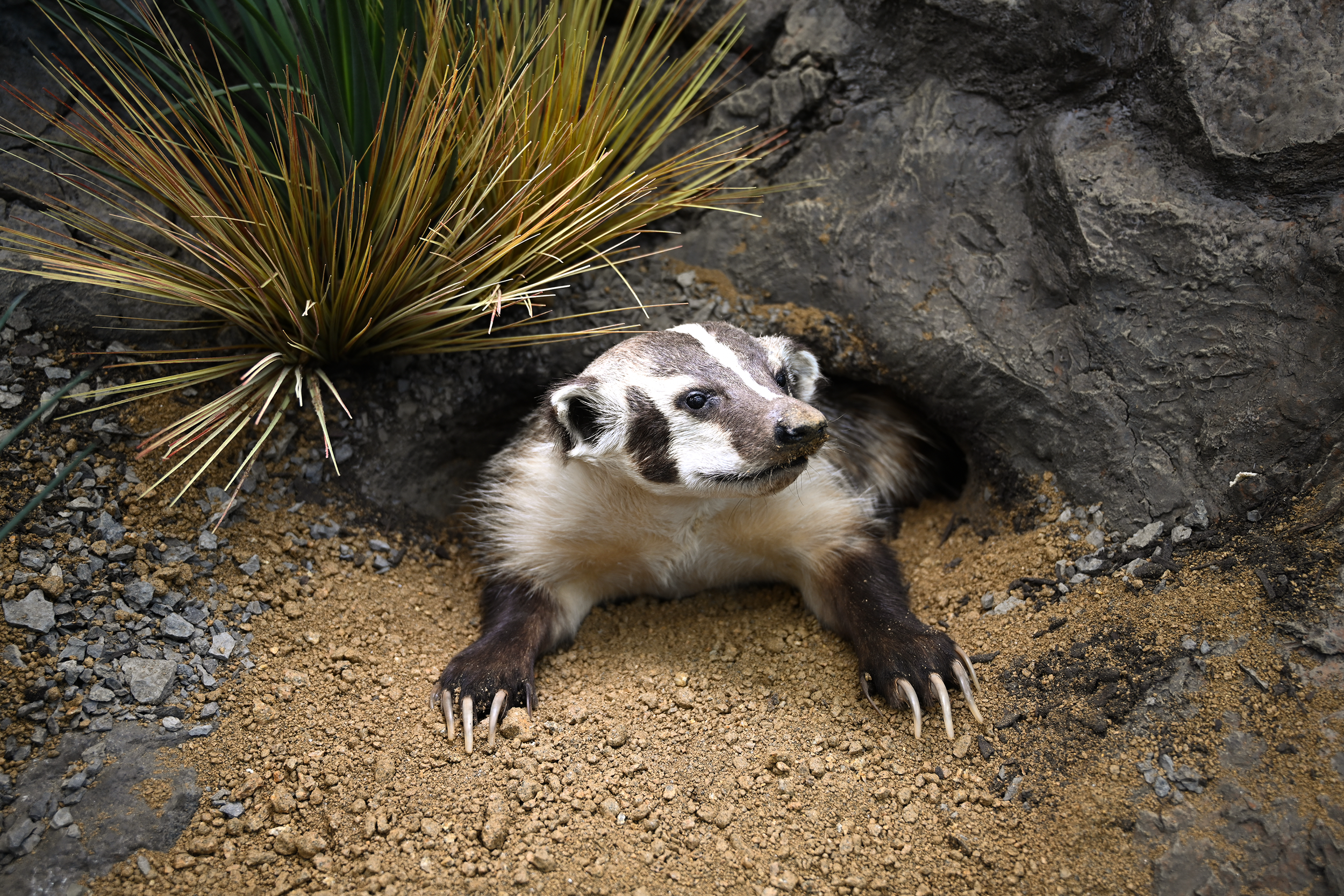
Cougar (Felis concolor) also called mountain lions is a large cat native to the Americas. It is the most widely distributed large, wild, mammal in the Western hemisphere. They are carnivores that prey on deer, elk, wild sheep, and small mammals. They have no natural predator other than humans.
Rocky Mountain Bighorn Sheep (Ovis canadensis canadensis) is the largest wild sheep in North America. They are found in Canada, Idaho, Montana, Wyoming, California, Washington, Oregon, North and South Dakota, New Mexico, and Arizona. Common predators are Cougars, coyotes, and black bears.
American Badger (Taxidea taxus) is a carnivore mammal of the weasel family. They are nocturnal living in underground burrows. They have long claws for digging, a keen sense of smell and hearing. Badgers prey on gophers, ground squirrels, moles, marmots, prairie dogs, mice and voles. They are common in Western Canada, and in Western, Central, and Northeastern U.S.
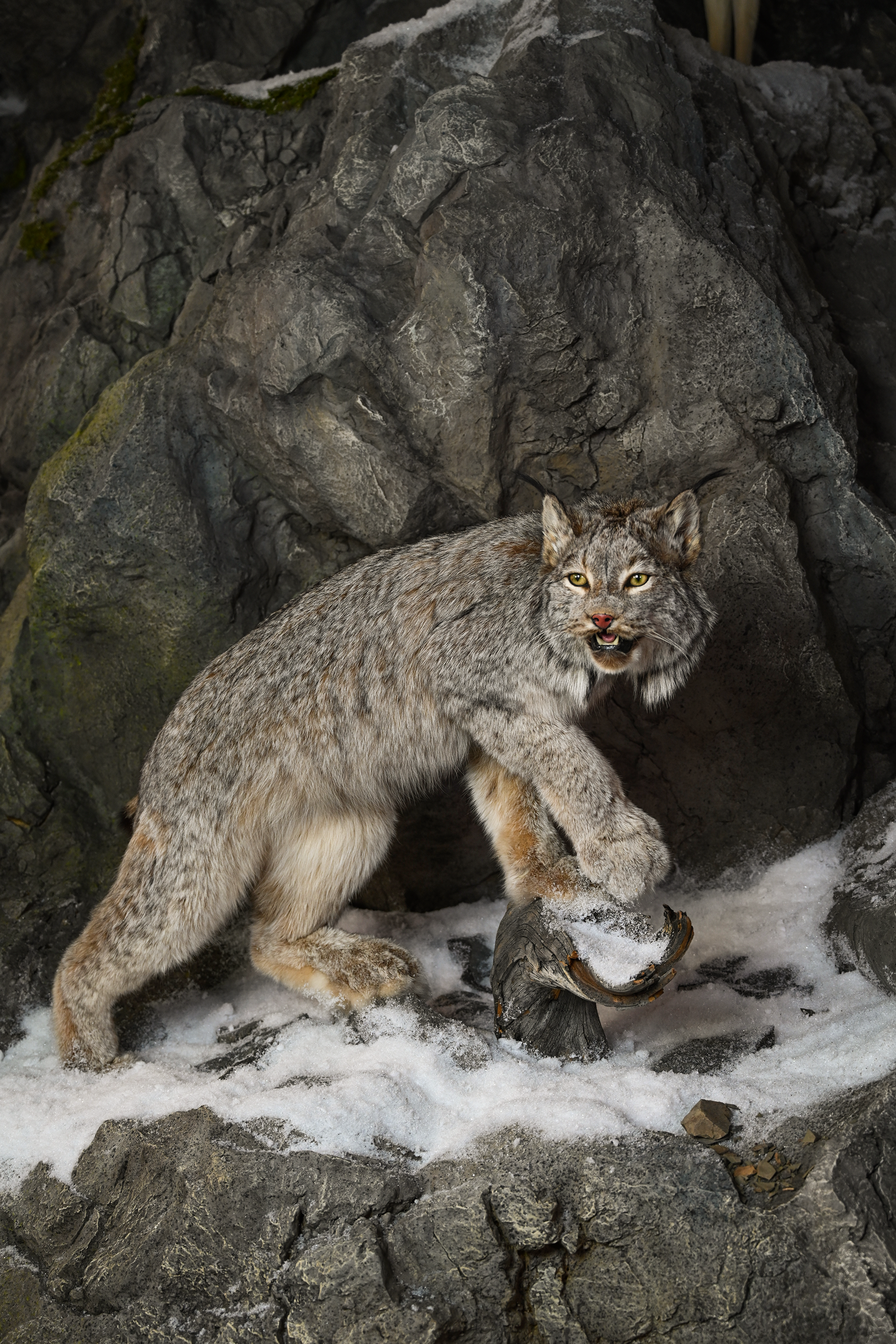
Lynx (Lynx canadansis) is a member of the Felidae (cat) family. It lives in boreal forest across North America. They are protected in Washington state, but are still trapped in Canada for their fur. Their primary prey are snowshoe hares and their numbers fluctuate with the cycles of snowshoe hare populations.
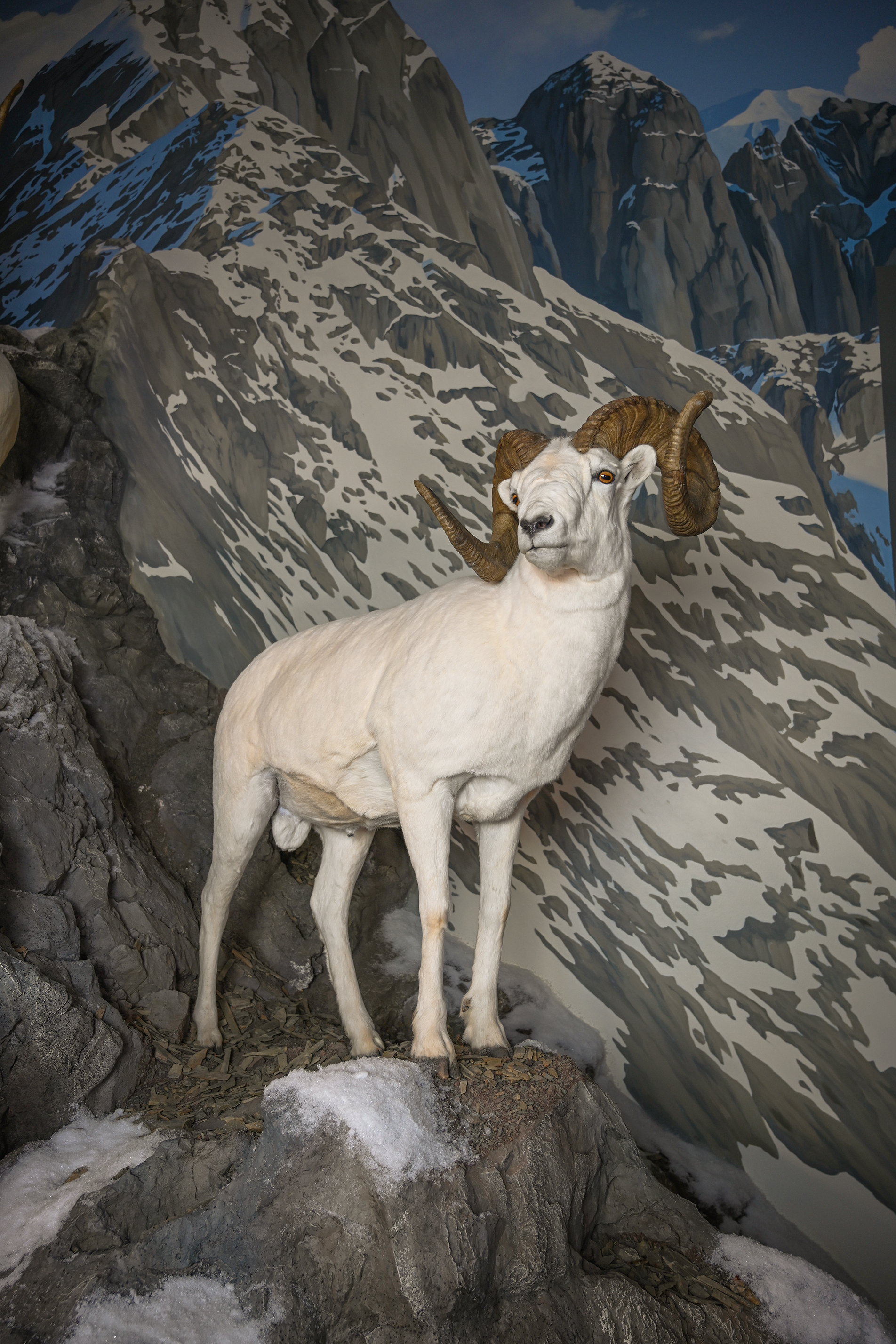
Dall’s Sheep (Ovis dalli dalli) is the only pure wild white sheep in the world. They live in rugged, inaccessible mountain habitats in Alaska, Yukon, Northwest Territories, and NW British Columbia. Their main food is grasses and low shrubs found in alpine meadows. Predators include wolves, coyotes, lynx, grizzly bears and golden eagles.
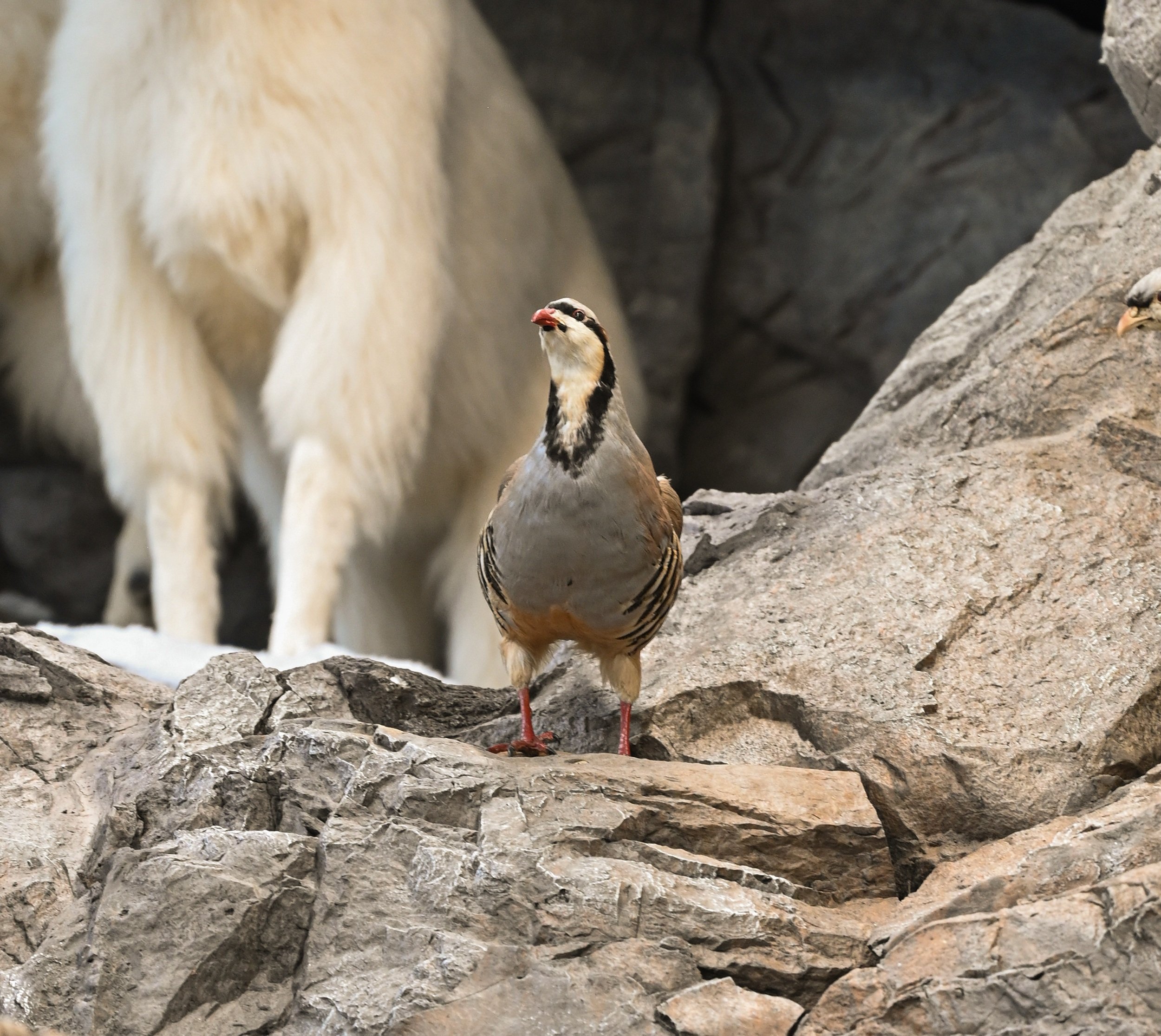
Chukar (Alectoris chukar) is a Palearctic upland game bird in the pheasant family Phasianidae introduced to North America from Eurasia. They live in high desert plains of western North America in Washington, Oregon, Idaho, Nevada, Utah, and California. They thrive in treacherous terrain and are difficult to hunt, often referred to as the “devil bird”. They live 3-5 years and are considered excellent table fair.